

Food for thought in 2025
We are proud to give you access to Grandpa Ray’s tidbits. Each week, something new and interesting is posted for your enjoyment.

Senior Supper Services began its trek across the culinary landscape on July 6th, 2021. It has been, roughly, Four-and-a half years since then—and here we are again at the threshold of a new year. It is often said that time flies; I believe that this year it traded in its wings for a jet pack! We’re hopeful that our efforts in 2025 will translate into bigger and better blessings in 2026, for all concerned. Our SSS family has continued to grow. Our growth has come primarily from your referrals and some limited advertising. Now the addition to our home delivery service we have reached into a larger set of Senior communities in Riverside and San Bernardino WELBE facilities, which have increased our blessings to senior stomachs by leaps and bounds. We have expanded our reach incrementally, and we will be serving additional communities in 2026. We immensely appreciate your help in this regard—we have met some very wonderful people during this time. We love those faithful to us and the ones that are a new addition during this past year. We are looking forward to blessing more and more as we reach into more facilities and homes across the Inland Empire.
The growth process is a learning process. So to our home delivery family. Thank you for your patience while we trek through the growth path Next year, we will continue to provide you (and all new additions to our SSS family) with the same quality and care associated with our meals. Again, Thank you for your continuing support.
Faithfully yours, Ray Duran aka Grandpa Ray
WITH LOVE AND DESSERTS
GILL & AMBER MEDINA
AND THE SSS CREW!!!

“CHRISTMAS TREE, OH CHRISTMAS TREE”
(A retro-Tidbit: This could be considered a form of re-gifting)
Once again we are poised to venture into the most wonderful time of the year—the Christmas season (the hyper-commercialization and looming recession not withstanding). The family-centered activities which began at Thanksgiving will continue with the added blessings of; gift giving, good will toward mankind, and above all (for the majority of Americans) honoring its namesake, Jesus Christ.
I have never given much thought to Christmas trees, other than I am enthralled by the beautiful and unique ways they are decorated. Since, the Christmas tree is indisputably the principal symbol and ornamental center piece of the season, I decided a deeper look was in order…so, I went down the proverbial rabbit hole.
It turns out that various Evergreen varieties have been used across all cultures to honor their respective deities: the Druidic Celts; the Egyptians, the Romans, and even the Scandinavians (as in the Vikings) did it. The primary difference between then and now is that then, only a solitary branch was used; usually over the doorway, which in my estimation renders those ancient deities as lesser gods… only a branch? Come on! Whereas, the tallest Christmas tree on record for ours is 122 feet tall. Hallelujah, baby!
Of course, attaining to those heights didn’t come easy. Historically, Germans were the first to invite full blown trees into their homes. In 1747, the tradition was brought to America by German settlers in Pennsylvania. As was to be expected, they encountered resistance from other Christian sects which regraded the practice as pagan—some still do. Ironically, it took British royalty to popularize the Christmas tree in America. In the 1848 edition of the London News, Queen Victoria and her family were depicted as standing around a Christmas tree in their home… castle?… mansion? Probably their “Winter residence.” Anyway, the hoity-toity from our East coast saw the setting as fashionable and glommed onto it; before long the hoi polloi followed suit and acceptability was ushered in the front door along with the Christmas tree. The Christmas tree had arrived! “Let the decorating begin!”

-Christmas trees have been sold commercially in America since 1850.
-New York city, in 1912, was the first to erect a community tree in its town square.
-Franklin Pierce was the first president to formally introduce a Christmas tree to the White House.
-Thomas Edison’s assistant is attributed with the idea of using electric lighting on Christmas trees (that deserves a Pulitzer Prize!)
ABOVE ALL DONT FORGET THE REAL REASON FOR THE SEASON AND THE MEANING OF THE TREE HE WAS HUNG ON
WELL-BEING: THE DANCE BETWEEN PLEASURE AND HAPPINESS PART I
—Recently, I learned that studies show that younger and older people have higher levels of well-being than those in middle age. I also learned that happiness levels rise steadily from age 50 upwards. At first blush, I thought that to be rather peculiar. My mind being what it is—insatiably curious—I decided to look in to what might be the essential difference between pleasure, happiness—and how they relate to well-being . This will be a cursory two-part look at the interplay between pleasure and happiness as it plays out in our sense of well-being.
Basically, to set the stage, Dopamine is the pleasure transmitter and Serotonin is the happiness transmitter. I discovered that how well we experience life takes place literally in the electrochemical activity in our “heads”—as these two transmitters operate. To a greater or lesser degree, our life’s choices also play an integral part in establishing the balance achieved between the two. Dopamine is the feel good neurotransmitter which says “this feels good I want more.” (pleasure). Serotonin is the opposite; it is the neurotransmitter that says, “this feels good I don’t want or need anymore” (happiness).That being the case, we will look at how pleasure and happiness manifest in our lives based on all this highly determinative neural activity.
There are a few ways to juxtapose these two in a very illuminating way. In part two, I will present you with a thumbnail summary of the difference between pleasure and happiness: and while at it, hopefully, answer the question, “why is it that older people experience higher levels of happiness than the middle-aged.” Hang on ’til next week to find out.
STAY TUNED FOR NEXT WEEKS PART 2….MAY I HAVE THIS DANCE?

(This installment of Foreign sounding foods created in America includes a bonus desert)
Swiss steak: At some point in the past before the advent of modern textiles, sheets of cloth were smoothed out by a hammering technique known as “swissing”. In another point in the past (to be more concise the point in question was 1895) Swiss immigrants in Ohio and Indiana took a literal hammer to rough cuts of rump, round, or shoulder meat. The term swissing was applied to the tenderizing of these tougher cuts of meat. This swissing, despite the name, took place in America. So did the creation of the now familiar recipe.
In 1930, a recipe for Swiss steak appeared in The American Century Cookbook which bore no resemblance to the immigrant’s original pummeled beef version. The recipe called for the stewing of the steaks in a tomato-like stew, which rendered them “melt in your mouth” with no knife required. This essentially finished the tenderizing process. Now for dessert!
German Chocolate cake: In 1852, American born, baker Samuel German invented a mild, dark baking chocolate for Baker’s Chocolate Brand, a subsidiary of General Foods. A few years later, an American housewife from Dallas, Texas, Joyce Clay submitted a recipe for German’s Chocolate cake for The Dallas Morning News. Her recipe was featured in the Recipe for the Day section of the newspaper. The misconception surrounding this delicious multi-layered delicacy’s origin arose when the possessive form (German’s) was mistakenly replaced by, simply—German. Instead of German’s Chocolate cake in was advertised and promoted as German Chocolate cake in newspapers throughout the country. Since the recipe popularity caused sales of Baker’s Brand Chocolate to increase by 73%, the company decided not to correct the misconception. German chocolate cake is a mountain of delicious goodness…I remember it well. However, in the two plus years I spent in Germany, I never encountered a memorable dessert, let alone German chocolate cake.
The Tidbits series I wrote for the month of November covered some curious aspects of the uniquely American tradition, which makes landfall this Thursday. We looked at the “ugly” bird that is transformed into a thing of beauty as the centerpiece of America’s dinner tables on that day. We marveled at the pumpkins which no one eats (but, quite poignantly, gets carved as well). So, all this comes to a head this Thursday; all that’s left is the “carving” and satisfying the “craving!”
To top off this Tidbits series, I would like to revisit the overarching theme of this holiday, gratitude. This time from a personal perspective.
I want to extend our heartfelt gratitude to all of you (our senior family and friends) from all of us at Senior Supper Services…THANK YOU! As for myself, I feel blessed to have met those of you on my route. It is my continuing pleasure to know and serve you. God bless everyone of you!
Finally, not all our seniors read my weekly articles, but to those of you that do, this is a special SHOUT OUT…”thank you so very much for indulging me.”
HAPPY THANKSGIVING AND BON APPÉTIT
“Food for thought” is a good thing, but sometimes you have to feed the heart as well.
Thanksgiving is right around the proverbial corner. The centerpiece, of the Thanksgiving repast we are all eagerly awaiting, is the peculiar poultry fowl known as the turkey. Out of curiosity, I decided to learn a bit more about the most well-known member of the Grouse family. Prior to that, the totality of my knowledge can be summed up as “a big bird we eat once a year.” In this week’s Tidbit, I include just a handful of interesting facts, that hopefully, will give you a better appreciation for this gobbling tom.
Here we go. First of all, the turkey is the largest game bird in America. There are five sub-species of turkeys. The Eastern wild turkey is the largest and can weigh as much as 35 pounds. The domesticated variety has been around for two-thousand years; however, there are still many wild turkeys in the U.S. and Canada. Surprisingly, prior to domestication, turkeys were not used for food; they were killed solely for their feathers (probably because they are so ugly). Speaking of which, Toms will grow five to six thousand beautifully iridescent feathers. Their courting prowess has everything to do with the strutting display of their plumage, very similar to male peacocks—“how do you like me now?”
Males are referred to as toms or gobblers (this is because only the toms make the characteristic gobbling sound, which can be heard as far as a mile away). Females are known as hens; the juveniles are called jakes; and the chicks are called poults. Turkeys are “social” animals; a group of them is referred to as a “rafter.” In addition to gobbling, which only the toms do, rafters communicate with each other by using purring and clucking sounds. A typical Tom has a lifespan of ten years (for obvious reasons, many don’t make it that far).
One particularly interesting aspect of the turkey is their visual acuity. As well as having near 360 degree peripheral vision, they see in color and have excellent depth perception (I’d like to know how researchers figured that out). Last but not least, everything in their field of vision is always in focus—no adjustments necessary!
Believe it or not, the turkey came very close to becoming America’s National bird. Ben Franklin wanted it to be the turkey, but lost out to George Washington who chose the bald eagle.


The beginning of the month of November is an anticipatory wind-up leading up to the gathering of families all over the country, for the most awaited meal of the year—the turkey-centric feast called Thanksgiving. The coming together of loved ones, friends, and others at this time is rich in significance beyond the amazing assortment of delicious food we will enjoy. As the name implies, Thanksgiving is an expression of gratitude for something wonderful that happened in the formative stages of our Republic.
We all know the story. Thanksgiving commemorates a historical event; it also, more specifically, represents a profound expression of the human heart—gratitude. Gratitude is not to be taken lightly. Unfortunately, like other important aspects of life, the din of modernity has relegated gratitude to something less than it is. However, it’s importance wasn’t lost to peoples of the distant past. For instance, Cicero the famous Roman orator noted that, “Gratitude is not only the greatest of virtues, but the mother of all others.” This season let’s express our gratitude, not just for the commemorated event, but for all of life’s blessings.

The month of November is National Gratitude month, which makes it the perfect time to do this. I might add that studies have been conducted on the health benefits of gratitude. The findings indicate that the sincere human expression of gratitude has multiple beneficial aspects; physical, emotional, mental, and spiritual. So, do yourself a favor— BE GRATEFUL!

—Before too long, the yearly assault from an army of sugar-seeking faux ghouls and and goblins—trick or treaters—will be upon us. The human cartoons we call children will soon “come-a-knocking” and charm us out of sugar stash. With amusement, we willing comply. Most are truly adorable, only an older minority are the “tricksters.” Even though, historically, the Halloween tradition can be traced back to the ancient Celtic festival of Samhain, Halloween represents different things to different groups. Not all celebrants celebrate for the same reason. This renders Halloween a confused mess and particularly unrecognizable from any thing celebrated circa two thousand years ago.
In addition to Halloween as we know it, on or around the same time-frame, you have; All Saints day, All Souls day, ritualized remembrances of deceased as in Dia de los Muertos, and a general celebration of the supernatural. For pagans, it is the most important day of the year. (obviously not because of the candy). For retailers it is about the “candy”. 2022 is estimated to bring in a whopping 20.6 billion dollars in Halloween related sales. That’s a nice trick for those treats! My personal bottom line assessment of all this is rather simple—all this transpires in the Fall season for a reason.
Plant life in all its diversity dies and there is another round of life on the other side. The mystery of life and its cycles is behind all of it and is symbolized by the seasonal changes. It is no coincidence that pumpkins are symbolic of Autumn. The transformation of a pumpkin into a jack-o-lantern symbolizes our focus on the supernatural during this time. Humans are obsessed with the after-life. Death casts its shadow closer and closer to us with the passage of time and the reality of our mortality takes front and center.
For me, in this modern context, it’s about the kids and paying them their sugary tribute. Not unlike the way Christmas and the giving of gifts is also about the children. At Christmas they learn about the blessings of “giving” as they receive gifts from family and friends; during Halloween they learn the same, while receiving from strangers.The doling out of sugar to our children during this time may be a gentle and gradual way to introduce them to the more pressing realities which await them in their next life…as adults.

—Yes, pumpkins are classified as a fruit and are part of the gourd family and are cousins to squash, cucumbers, zucchini, and believe or not…watermelons. Pumpkins are deemed to be the oldest cultivated crop in the world—before beans, even before wheat. Disputations abound as to where it originated. The consensus deems the Americas to be the point of origin (with a high probability that Central America is the primary ancestral region). Of the thirty varieties that exist, the most commonly used variety is the Connecticut field pumpkin. The majority of pumpkins used during the Halloween season are such.
The current annual harvest of the pumpkin in the United States exceeds half a million pounds. The irony of such bounty is that virtually none of the harvest is used for food. That is surprising because the pumpkin is loaded with things that are healthy; so much so that is classified as a super food.Our colonial forefathers would be aghast at such waste, especially since pumpkins helped them to survive the initial winters in the “new world.” This renders the modern day pumpkin more of an ornament than a food. Even the so-called pumpkin pies don’t have an ounce of pumpkin in them! The majority of “pumpkin pie” filling is really made from Dickinson squash.
So what is up with American’s fascination with the pumpkin during this season? Personally, I think that part of the American DNA is still attached to the old fashioned way of life represented by small family farms. It may be that pumpkins symbolize the intermediary link between modern urban living and the rapidly diminishing rural way of life.
There are many things that were part of the backdrop to our lives during our younger, formative years. That is to say, they were there, but were taken for granted as if they had always been there. One such thing is frozen food, and in particular Birdseye peas. It may have been vegetables, meat, or fish that were residing in the freezer section of our fridges, but there haven’t always been freezers…or frozen food for that matter. The truth is that to get to where we are today, in terms of frozen food technology, it took a lot of trial and error, experimentation, and innovation. That being said, let’s take a brief look at how it all started and how we got here.
An example of early attempts at commercializing the freezing of food would be the New South Wales Fresh Food and Ice company from Sidney, Australia; they endeavored to ship frozen meat to London England. The venture failed (as others would) because the items were frozen slowly, a process which rendered the meat tasteless and dehydrated from loss of moisture after thawing. The problem has always been that slow freezing doesn’t work.
Birdseye began by experimenting with peas. Immediately after picking, he would blanche them (this would prevent the negative effects of enzymatic action) then he would fast freeze them. To his surprise, this resulted in the peas turning into a deep rich green color—Birdseye peas were born! Before long, frozen peas were introduced to the American public and were well-received. As more and more households were able to afford refrigerators with build-in freezers, the demand and variety of available frozen foods skyrocketed. The rest, to use a cliché, is history.
Along comes the hero of this piece, Clarence Birdseye. While working as a trapper in Newfoundland, Canada, alongside a local Inuit tribe, he witnessed something that would be the inspiration for what would become a 156.4 billion dollar industry. He observed that in these sub-zero conditions, when the fishermen pulled fish from the water the fish would freeze instantaneously. That’s good and well; however, the clincher was that when eaten months later the fish maintained their taste and texture! Clarence Birdseye would subsequently devote himself to replicating, perfecting, and mechanizing a fast-freezing technology.
Besides the usual “suspects”, other novel foods entered the cryogenic lineup; pizza, snack foods, and a variety of frozen desserts began to find their homes in America’s freezers. By 1950 entire meals would be frozen, which marked the next evolution of frozen foods. This had a profound impact on the American lifestyle and marked the culmination of the convenience food explosion. Convenience leads to more leisure time and less time spent in the kitchen. Ladies you are forever in debt to the Birdseye view.


“I ESPECIALLY LOVE COOKING IN THE FALL. AND WINTER….”
This week we will celebrate Oktoberfest the Senior Supper Services way! I love all of you and hope you are all enjoying you delicious meals. This is my favorite time of year especially because it brings families together. If you are short on family, remember that SSS will bring you all the flavors of the season directly to your door. So don’t be hesitant Invite a neighbor or friend over and order a meal for both of you. Watch a good movie and put on a pot of coffee. This time of year is time to reflect and remember what it the most important…..We are alive and made in God’s image. We are fearfully and wonderfully made for a purpose that you may not see directly but. Live life and always try and share a piece of your heart with those who might need it during these months.
Chef-Amber


The recent string of cooler temperatures ushered in the official start of Autumn. Saturday, September 23rd was the Autumnal equinox, which marks the passage of the sun over the equator, giving us equal amounts daylight and darkness. From that point on, in the Northern hemisphere, Spring officially begins; in the Southern hemisphere (where we are) the Fall season begins. As the sun slowly treks South, things begin to change quickly. Temperatures fall, so do colorful leaves—hence, the word Fall is used interchangeably with Autumn. Awaiting us in the ensuing Fall season are; Thanksgiving, Halloween, pumpkins and jack-a-lanterns, daylight savings, and shorter days. All of which are welcome after the blistering gauntlet of Summer.
We owe all this to the unique tilt and position of the Sun during this time. It is beyond remarkable to me that something as hot and massive like the sun can give us four distinct seasons just by its juxtaposition to the Earth. Absolutely amazing!

Today, there are an estimated half-million cannery workers that make all this possible. The industry can boast that it changed the diet of people worldwide and makes it possible for more people to eat their “three squares” a day.
— A modern healthy diet is based on the “three squares” premise…breakfast, lunch, and dinner. Three square meals a day, what a concept. The sad reality is that people throughout time barely ate once a day and were forced to forage to accomplish even that. Not only that but in lean times (Europe in the winter for instance) food was even more scarce. Also, the paramount strategic consideration of military campaigns was not weaponry and munitions but, the feeding of their armies. (your typical army foraged more than they fought) The old methods of preserving food did not work very well—spoilage was rampant. Something had to be done.
Because of the pressing nature of the issue, Napoleon Bonaparte decided to offer a reward of 12,000 Franks to the person who could solve this problem. Nicholas Appert, a French confectioner rose to the occasion. In 1810 he presented his solution and was awarded the 12,000 Franks prize. Even though he used glass bottles for his process, his main contribution was the elimination of air and micro-organisms in the encapsulated foods. Sealing the bottles with cork and wax solved the problem of aerobic decomposition: boiling the sealed bottles in temperatures in excess of 100 degrees killed the organisms of spoilage.
Around the same time, in England, Peter Durand was experimenting with iron cans coated with tin. This was an improvement over bottles because bottles were easily broken. The next step was canning’s debut in America. In the U.S., canning had improved, but was done by hand, therefore; very expensive and gained little-to-no public acceptance overall. It took the Civil war to finally gain popular approval for these new “fangled” cans.
Well, you know what happens when new things come to America…American ingenuity takes over. We developed the art of canning on two levels. Before long there were very precise and complex machinery involved in every aspect; hence, prices dropped considerably. In addition the innovative spirit improved on fruits and vegetables through cross-pollination and selective breeding—as a result, today’s vegetables are not the same as yesterday’s. The whole process takes place without sacrificing nutritional value, while maintaining a near-fresh state that doesn’t alter taste and texture—pretty impressive!
Previously, we saw that the New world scored big on the animal exchange that took place with the Old world. We got horses, cows, pigs, and sheep; they got llamas, turkeys, and ducks. (I can’t imagine llamas roaming around in France) For that matter they don’t celebrate Thanksgiving over there, so the turkeys were basically nugatory…just kidding. The plant component of the “exchange” is where the Old world gained the advantage, except for wheat, of course. Based on the accompanying graphic, they literally got a veritable cornucopia from us.
They got; tobacco, sweet potatoes, avocados, potatoes, tomatoes, pumpkins, corn, beans, squash, cacao beans, and pineapples. Not bad. We, on the other hand, got sugar cane, coffee beans, citrus fruit, grapes, and the blessed honey bee—with the ancillary benefit of honey. Overall, the Old world benefitted monetarily from their various agricultural exploits in the New world. Initially, in terms of the of the peoples involved, the big losers were the indigenous inhabitants of the New world because of the decimating impact of European diseases. Ultimately, the New world population became the crucible for what would become the “melting pot” concept that would define America. In the final analysis, two previously isolated worlds yielded the world we know today.


WHEAT IN AMERICA: STRANGER IN A STRANGE LAND
Last week we took a look at the evolution of bread from the perspective of the electric slicer and the “wonder” of white bread. This is a short follow-up with wheat as the primary emphasis.
Wheat was not indigenous to America and was introduced to us by early European explorers. Remember, Europe and other parts of the world had been growing wheat for millennia, yet we outpaced them all by our innovations in farming technologies. Fortunately, these advances in wheat production also helped to accelerate the art of bread making. The United States achieved all this within a short period of 200 years. The real wonder, beyond amazement, is how, after WWII we became the “Bread basket to the world.”
These tandem advances allowed us to become the envy of the world. Another reason this happened is that the major food staple in other countries was rice; in the U.S. it was wheat. While other countries concerned themselves with growing rice, we concentrated on perfecting wheat to the point where we would, ultimately, help feed the world. Since advances in farming technologies and innovations in large-scale bread production grew apace, it enabled us to export bread and wheat to the rest of the world. So it can be said, ‘we saved the world twice.’ The first time was when we entered WWII and prevented world domination by totalitarian and imperialistic aggressors, and after the war by helping to feed the war-torn and weary nations—GOD BLESS AMERICA!

A British statesman from the 1700s, John Montagu, a notorious and insatiable gambler, is attributed with being the first to put beef between to chunks of bread. This, conveniently allowed him to eat with one hand, while continuing to gamble uninterrupted. (I wonder if he won more than he lost?) His addiction may very well have presaged the modern day sandwich.
Wheat was not indigenous to the Americas and was brought here during what has become known as the Columbian exchange (I will dedicate a future Tidbit to the Columbian exchange). Bread making would eventually be transformed by the inventive genius of the American spirit.
Time passes. Many of America’s immigrants come pouring into the U.S.A. bringing baking skills with them; as as
Result makeshift bakeries in cellars abound. The breads made by these home-based bakeries were considered “dark and dirty” bread. Dark because the wheat used was ordinary wheat in its natural form. Dirty because of the unsanitary conditions under which it was produced. All bread was “dark” until mechanical milling machines were invented— they separated the wheat from its oily component, resulting in what became known as “white” flour. White flour was considered unhealthy because all nutrients had been removed by the milling process. Two things would later come into play which would offset the stigma of denuded white bread—packaging and the electric bread slicer.
In 1917 Otto Rohwedder invented the electric bread slicer. It was not well-received. Since all this predates preservatives, pre-sliced bread was believed to dry up faster and therefore was rejected, out of hand, as inexpedient. By the 1950s flexible plastic packaging, in use today, had arrived. Cardboard and wax paper were tried initially, but without commercial success. The stage was now set for the dominance of the white pre-packaged sliced wonder known as…Wonder bread! Everyone reading this Tidbit should remember it—and chances are, as a youngster you ate a sandwich made with it. I’m not a betting man like the Earl, but I bet that it was probably a peanut butter and jelly sandwich.
Wonder bread would eventually be enriched and would claim in its marketing campaigns “ Wonder bread builds strong bodies 12 ways!” Wonder bread’s history is a roller coaster ride of changes and transitions; at one point its production was halted, until recently. Sandwiches were popularized and have become a staple in the American diet. Now, it should make more sense why people say, “it’s the greatest invention since sliced bread!” Today, white bread has fallen out of favor because the original whole wheat is considered, by far, to be the healthier of the two.
There were times when I would see very spartan meals (primarily in periodicals) that were very artistically presented and had an otherworldly appeal to them. My first thought was that French haute cuisine was at play here…not so! It turns out that it was an example of Molecular gastronomy. Molecular gastronomy? What is that? I recently decided to look into it.
When science (Chemistry in particular) is mixed with the culinary arts you have a pseudoscience whose concoctions are touted as artistic. Molecular gastronomy is a process used to create food by manipulating its molecular composition to alter its form, texture, and flavor. The practitioners claim that their creations yield flavorful, functional, and artistic results. The problem is that their creations don’t add anything new to what everyday chefs already produce in their kitchens…flavorful food, functional food, and artistically presented meals. That being said, these practitioners do operate in a completely different realm from traditional chefs.
Their contribution is more correctly, a chemical patchwork of bizarre food contortions however novel they may be. Their claim of “science” in their argot and practice is just a way of legitimizing what they do; then they turn around and claim another high ground—artistry. In fact, they have turned the kitchen into a mad scientist’s laboratory—and yes, they use test tubes, lasers, and other alembics in their preparations. They relish being creator-like as they take that which nature produces and alter it in freakish ways—the flavor not withstanding. What follows are examples of Molecular cuisine.
-Miniature apples that are made to taste like meat. I can’t wait for meat that tastes like apples.
-Fake caviar made from olive oil. This one sounds fishy, but doesn’t smell like it.
-Transparent ravioli—I’ve heard of sea food, but not see-through food.
-Instant ice cream—very reminiscent of “fried” ice cream.
I acknowledge that my assessment of molecular gastronomy is somewhat “tongue in cheek” because there is some fun to be had here; however, on a serious note, it seems likely that only the rich and extremely bored will glom on to this. Again I do wish to emphasize that there is a distinction between these two disciplines: molecular gastronomy is more in the area of science per se and does not operate in the traditional culinary domain, even though there is some overlap.


Every year, right around summertime, my two favorite fruits become available, cherries and watermelons. This Tidbit is about the latter. This far into the summer, I have already enjoyed eating watermelon several times. However, watermelons in their original makeup would never have graced my palate. A couple of millennia hence, somewhere in Northern Africa, the precursor to the modern-day watermelon was found to be only two inches in diameter, and had a yellow and bitter inner-flesh.
The Egyptians are credited for the cultivation of the watermelon; halfway through its transformation, the watermelon became larger (approximately the size of a modern Honeydew melon) with a pinkish inner color with six spiral-like sections. The elongated form familiar to us probably took shape sometime during the latter Eygptian empire. (this caught my attention because I have seen hieroglyphic depictions of Pharaohs with curiously elongated skulls…I’m just saying!) Somewhere along the way, they took root in China, which today produces about one-half of all the world’s watermelons. This popular summer fruit would eventually be brought to Europe by way of Spain by the Moors. Next, the watermelon’s introduction to the United States was inevitable.
As the story goes, a military officer by the name of Lawson was captured and imprisoned on a ship in the West Indies. While imprisoned he was, on occasion, given a treat by the kindly captain—slices of watermelon. He saves the precious seeds; upon his repatriation to America he is very guarded of the seeds, but eventually gives some to a close and trusted friend from Georgia—Nathaniel Bradford. It turns out that the Bradford watermelon was the sweetest and juiciest watermelon EVER! As a result, it became highly coveted and was the favorite target of thieves (third only to cattle rustling and horse theft). Defensive measures had to be taken—almost all were drastic. First armed guards, not good enough. Then random poisoning of unmarked melons accompanied by a warning sign “PICK AT YOUR OWN RISK!” As a result, more deaths were caused by watermelons, in the agricultural landscape, than anything else. Entire families were found dead from eating these poisoned watermelons—no matter how you slice it… that is tragic!
From the tragic to the amazing: the World record for the largest watermelon ever grown goes to Chris Kent of Tennessee—it weighed in at 350.5 pounds. Now, that is what I call a canteen!


No other spice has been shrouded in mystery through the millennia such as cinnamon has. Of all the spices involved in the spice trade, cinnamon was the most expensive and the most sought after. Today, it is so common, so inexpensive, yet early on legends and myths abounded as to its origin; it was the best kept secret of its time. Only the elites of the day had access to it, let alone could afford it. It is recorded that in Rome, twelve ounces of cinnamon cost the equivalent of four years of an average Roman laborers wages.
We have records of the occurrence of cinnamon in many Mediterranean cultures; Egypt, Greece, and Rome for example. Even to them, at that time, the source of the cinnamon was still unknown.There are two main varieties of cinnamon: “true” or Ceylon cinnamon, and the Cassia variety which comes primarily from Indonesia and China. Eventually, hundreds of years later, Sri Lanka was disclosed to be the source of the “true” Ceylonese variety. Mystery solved!
It turns out that this mythical spice comes from a tropical family of Laurel trees. More specifically, cinnamon is the aromatic inner-bark of said trees. Since it is tropical in nature, there are only certain climates in which it will grow successfully. Europe tried and failed in its attempts to cultivate it—too cold!
If, as I mentioned in a previous installment, the blueberry is considered a super-food, then cinnamon is the super-food of spices. Like blueberries, cinnamon touts medicinal benefits for every ailment imaginable. Hence, I won’t burden you with the list.
Rest assured, if you have an issue of some sort give cinnamon a go-around; you might be surprised—try it as a tea.
No one likes being lied to. I especially hate lies when the lie involves intentional deception of the public with lofty claims of promoting the greater good— virtue signaling if you will. That is what the plastic industry has been doing regarding the fate of “recycled” plastics. They have perpetrated a fraud. Plastic recycling is considered a commodity and as such is a money maker for those involved in the process. Only about 20% of the recycled plastic has any market value—the rest is junk that no one wants.
Inscribed within the recycling symbol is a number from one to seven. Only items with the number one or the number two are the focus of the recycling industry. This 20% comprises plastic bottles and containers. All other forms of plastic have little or no value. One ton of recyclable plastic is worth $1000. The majority of plastic which is non-recyclable is worth a negative 17 dollars per ton. In other words you have to pay someone to take it. Early on in the saga the Chinese were taking our dirty plastic, until they realized that it was a net liability.
In other words, we have been fed a lie. 80% of all plastics winds up in landfills and who knows where else. IT DOESN’T GET RECYCLED! This “dirty” plastic can only be harming the planet—quite the opposite of the stated intention of “recycle to save the planet.” When we think of recycling plastic, we think that the plastic waste will come back as another product. It doesn’t!
The whole thing is more insidious than meets the eye. Initially, people were reusing these containers and not disposing of them because they were reusable. That meant that plastic manufacturers weren’t making money, since people weren’t getting rid of their reusables. A desperation Ad campaign ensued to convince us to get rid of what we had and to buy some more… in perpetuity. Then when we began to get rid of it, over time the resulting plastic pollution problem caused a backlash for them. Their next slight-of-hand was an Ad campaign blaming the public for carelessly discarding their plastic waste; that was the advent of the recycling lie. The only problem, as we have noted, is that the recycling isn’t happening as they portrayed it to the public. The recycling of their lies is the only effective recycling that has taken place to date.


For it’s size, there is no better food source for promoting physical well-being.
—Last week I mentioned that among the many things celebrated in July are blueberries— National Blueberry Month to be exact. Its true that every day we are surrounded by things we are negligibly aware of; commonplace things which we overlook. In my limited sphere of existence, blueberries were one of those nugatory things. That all changed when my sister-in-law moved to Oregon awhile back. While there she discovered the wonders of the insignificant blueberry; she has been on the blueberry bandwagon ever since. (Oregon as well as Maine are the nation’s top producers of the blue marvel) As for myself, blueberries were not on my radar until then; now they are a constant presence in our fridge. So what is it about the blueberry that makes it one of nature’s best offerings and worthy of our attention?
For starters, not many fruits or vegetables are designated to be a SUPERFOOD. Blueberries are considered to be North America’s contribution to the superfood pantheon. Why superfood? The nutritional and medical profile for the blueberry is “off-the-charts” compared to other foods common to us—it is jam-packed with nutrition. What does this nutrition confer to us?
Blueberries are very high in antioxidant flavonoid compounds which are anti-microbial and anti-diabetic. They also have a significant effect on reducing various forms of cognitive decline. Blueberries are also very effective in reducing cholesterol and thus help to reduce hypertension, making them very heart healthy. At 80 calories per cup they provide a variety of vitamins, minerals, and fiber.

July is the second month of the Summer season, and thanks to the pyrotechnics-laden celebrations, this month started with a bang. My neighborhood, in particular, was relentlessly assaulted by salvos of bottle rockets for days prior and days after the 4th— the neighborhood pets/animals must be frazzled! On top of that, the Dog Days of Summer are already upon us (this year—July 3rd through August 11th) Despite the celebratory raucous and the heat, July is chockfull of interesting events and celebrations—some of which I will touch upon in this week’s installment of the TIDBITS.
For starters, Roman General Julius Caesar is the namesake for the month of July; prior to that it was known as Quintilis—the 5th month in the Roman ten-month calendar. Speaking of things historical, “In God We Trust” was added to all U.S. currency on July 11,1955. On July 1st, 1947, the first U.S. postage stamps were issued. A few of the notables that entered the earthly realm during July: J.K. Rowling—on July 31; Nikola Tesla—on July 10; Robin Williams—on July 21; Princess Diana—on July 1. (all but one of the above has left the earthly realm) By the way, the birthstone for all the above is the Ruby. I’m certain some of our SSS seniors have birthdays this month; so Happy Birthday to YOU!
National Day celebrations abound in July; most of them are “tongue in cheek” celebrations which bring attention to the frivolous. For example, July 4th is National Sidewalk Egg Frying Day; July 10th is Don’t Step On A Bee Day; July 13th is National Celebrate Your Geekness Day— “tongue in cheek frivolity” is exactly right!
Some of the more noteworthy celebrations, are the National Month celebrations. Among those celebrated this month are: National Culinary Arts Month (Amber this is your month); National Hot Dog Month; National Ice-Cream Month; and National Blueberry Month to name a few.
On that note, let’s make July the best month ever, by enjoying the blessings it brings with a grateful heart regardless of the heat.
I am one of approximately 70 million fathers in the USA; I was born on June 19, 1948. Thirty years previously, on June 19, 1910, the first official statewide recognition and celebration, in the nation, of Father’s Day took place in Washington state. To get beyond that singular state’s recognition of Father’s Day, to a national level, was a hard upward slog—the opposition was fierce and came mostly from men.
Men were unable to wrap their heads around the idea that they should receive the same sentimental consideration (flowers and chocolates) that their feminine counterparts deserved. Men seemed to instinctively stand against “such nonsense.” In addition, the obvious and inevitable commercialization of the celebration was another source of resistance (the activist, Anna Jarvis, who founded Mother’s Day eventually campaigned against Mother’s Day because of her disdain for the commercialization that overshadowed it).
The two most disruptive events of the twentieth century, the Great Depression and WWII, were key in setting the stage for the ultimate national sanctioning of Father’s Day. An effort, during the 1930s, to create a combined celebration for mothers and fathers—a Parent’s Day— was brought to an abrupt end by the looming depression (nonetheless, it softened the opposition, somewhat). World War II, on the other hand, served to bolster the idea of a Father’s Day based on the sentiment of support for troops involved in the war effort. This only resulted in an institutional celebration, with no national recognition of an official Father’s Day. A couple of decades later fathers would finally have their day.
In 1972, President Richard Nixon formally made Father’s Day a nationally recognized celebration on par with Mother’s Day. Commercialization ensued, as expected, to the tune of one-billion dollars of Father’s day gifts annually (hello, neckties, aftershave, and golf clubs). I LOVE THIS COUNTRY!!
HAPPY FATHER’S DAY TO ALL OUR SENIOR FATHERS!
This week I decided to lighten up a tidbitty and post some bite-size humor for your enjoyment. While perusing the vastness of the internet in search of my next post, I happened upon a few places that had some clever food related jokes—more like clever riddles. Although, next week is the 4th of July, I was hesitant to do another installment about it. If you are sufficiently motivated, look up last year’s installment on the 4th of July by visiting the Tidbits archive. Here we go…enjoy.
Q: What do you call cheese that isn’t yours?
A: Nacho cheese.
Q: What kind of coffee was served on the Titanic?
A: Sanka!
Q: Waiter, will my pizza be long?
A: No sir, it will be round!
Q: What is green and sings?
A: Elvis Parsley
Q: What’s the best thing to put into a pie?
A: Your teeth!
Q: Waiter, this food tastes kind of funny?
A: Then why aren’t you laughing!
Q: What do you call a “phony” macaroni?
A: An impasta!
Q: What kind of nuts always seems to have a cold?
A: Cashews!
I hope that this, in the least, illicited a smile from you. Have a wonderful week. Until next time, this is Grandpa Ray signing off! Eat Well. Be Well!
BONUS: What kind of candy do children eat in a school playground?
RECESS PIECES!
THE ENTERIC NERVOUS SYSTEM: THE MIND BEHIND THE MICROBIOTA
PART 2
—This week we take an expanded look at the Enteric Nervous System and the forward-looking advances that, hopefully, will expand our health horizons. First, let’s take a look at the primary organs under control of the ENS. They include; the esophagus, stomach, small and large intestines, the gall bladder, liver, and pancreas. All of these and more comprise the microbiota which is the complex under the purview of the ENS. (recall that the sheath of neurons imbedded in the alimentary track is the controlling mechanism of all that transpires there—the least of which is the the smooth processing of the food and nutrients from ingestion to excretion). As noted previously, the majority of our immune system resides there as well. We’ve already seen that our mood and well-being are affected by its ongoing activity. What follows is a brief overview of some of the relevant advances in this arena.
—A new approach to understanding neurological disorders: In our gut reside trillions of microbes, some good some bad. Researchers now believe that the mechanism of communication between the two plays a significant role in neurological conditions such as; Parkinson’s, Alzheimer’s, Schizophrenia, Anxiety and Autism—let’s hope for the best.
—Anxiety: Anxiety has always been seen as the cause of intestinal distress; the new approach reverses the causal link—intestinal distress causes anxiety.
—Autism: Many of the children affected by this developmental disorder also suffer from serious GI issues. Excessive levels of serotonin in the gut is viewed as the culprit. Treatment based on this knowledge is already reaping results—thousands of parents are seeing noticeable improvements in their children from these new serotonin-reduction treatments.
—Osteoporosis: Here as well, serotonin-reduction treatments counteract bone-mass deterioration in test rodents—very promising!
Thanks for bearing with me through this slog of pseudo-intellectualism; I hope this has helped to impart some insight into the unseen inner-world of our stomachs, and the promise that the future holds for our collective well-being. Don’t forget to fletcherize!…BON APPÉTIT!

TWO BRAINS ARE BETTER THAN ONE: THE ENTERIC NERVOUS SYSTEM
PART 1
—The weekly Tidbits that I write are mostly about what we put in our stomachs. In this week’s installment I want to give you brief look into the stomach which processes that food and what new research reveals about it.
Scientists are constantly pushing the boundaries of current knowledge through their prodigious research. These researchers are like the pioneers of old, except they explore new and fantastic frontiers of knowledge. Dr. Michael Gershon, the Medical Department Chair at Columbia University, is such a pioneer. His field of research is in the emergent field of Neurogastroenterology (that word is probably giving you indigestion, but in simple terms it is the field of study that sees our stomach as a second brain) They have discovered an extensive network of 100 million-plus neurons embedded in the nine-meter long tube of our gut; the primary function of which is to communicate with our skull-encapsulated brain. This communication link, however, is a one-way channel of communication—gut to brain ONLY.
Our main brain contains the most neurons (in the trillions) while the enteric nervous system situated in the gut has more neurons than our spinal cord and even the peripheral nervous system. This is why they refer to our microbiome, our gut, as a second brain.
I hope this whets your appetite, because next week we will see how and what this second brain thinks about…or does it think?

The meaning of Easter has, by many, lost its meaning. Easter egg hunts, baskets and chocolate bunnies have become the focal point of all Easter activities. But in our family we Celebrate with like minded people Celebrating the Death and Resurrection of our Lord and Savior Jesus Christ! We do all we do for our Senior Family and Friends because He who died for us put in our hearts to serve those who served us for so many years of their lives.
Thank you! We are grateful for all of you who have been with us faithfully for the last 4 years and we are thankful for what is yet to come.
Happy Easter from our house to yours!
From Gill & Amber Medina, Your delivery and kitchen staff

For the longest time garlic was used solely for its medicinal aspects which are legion. Even though its primary benefits are related to the heart and the blood system, its healing powers cover every ailment known to afflict mankind—it is easier to list things it doesn’t heal, rather than the endless number of things it is alleged to heal. It is literally used for everything imaginable! As an added bonus, garlic is a known apotropaic (an item or thing used to ward off evil spirits—Count Dracula comes to mind). It was thought that a vampire’s bite would not transform a victim into a vampire if he had garlic in his system.
There isn’t an empire or culture that didn’t have a romance with garlic. Greeks, Egyptians, Chinese, and Romans all fell in love with it. The Egyptians would give it to their labor forces, which wound up being so key to the workers that they rebelled when garlic was suddenly unavailable. To this day, China produces 80% of all garlic worldwide.
The term “garlic eaters” was used derogatorily against groups or cultures that were known garlic enthusiasts. The Romans did it to the Jews; the Italians in America endured similar ridicule. Garlic itself was referred to as “The Stinking Rose.”
It took a long while before garlic received its due in the culinary arena. The next logical step in garlic’s evolution was its use in cooking. Instead of direct oral ingestion, now it was a recipe item for a variety of dishes
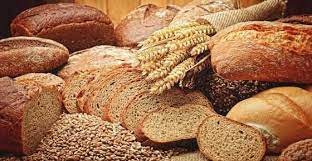
As I went about researching this topic, about life’s most basic food, I discovered that there was no consensus as to when mankind began its love affair with bread. My personal opinion is that mankind began utilizing bread as soon as grains began to be harvested. Bread making is universal, since every culture in the world has its own style of bread. There are three basic types of bread: high-rising types that utilize rapid-rise yeast and are baked in pans; medium rising types, like some French breads; and flatbread types, which are, undoubtedly, the oldest type.
Something else that is culturally universal is some form of distilled alcoholic beverage, like beer. Yeast is a byproduct of the distilling process; it wasn’t long before bakers began using it. In the 19th century, Dutch bread bakers obtained yeast from their brewing counterparts—the Dutch were the first to sell yeast commercially. It spread from there.
Today, with a cornucopia of commercially available foods, bread has become an afterthought, an ancillary adornment to most modern diets. The staff of life has, in some instances, become a threat to life. Bread is the main source of carbohydrates in the western diet, and is avoided by many because of health concerns— obesity and diabetes come to mind. Then there are those that love carbs with impunity—I, yours truly, am a such a one. I especially love the “Bread of life”.
“HAPPY ST. PATRICK’S DAY FROM SENIOR SUPPER SERVICES!!!!!”

Even though the potato is more generally associated with the Irish because of the potato blight that triggered a famine in Ireland that killed a million people, France can claim some credit for the popularization of the allusive tuber. While people in Ireland had adapted their diets to the potato, France outlawed it in 1748. While one country depended on it to survive, the other considered it unfit for human consumption.
The person responsible for turning things around in France was a pharmacist by the name of Antwan Augustine Parmenter. While a prisoner of war in Prussia, he was forced to subsist on the lowly potato. While there (after some experimenting) he discovered that the potato could be tasty as well as healthy—I guess he didn’t have a choice in the matter. Being a man of science, he was able to refine the potato to the point of palatabilty; after his repatriation to France he embarked on a lengthy pro-potato promotional campaign. Due to his efforts, France reinstated the potato in 1772. For his contribution he has been memorialized by the culinary world—any dish prepared with potatoes is referred to as a Parmentier dish.
Edward Anton Asselbergs a Dutch Chemist took the potato to the next level in 1962 by inventing the modern process of making dehydrated mashed potato flakes— the lowly potato was set to finally take the world by storm. And it has been a “mashing” success.

The easily available and universally loved product of the cacao bean wasn’t always the milk chocolate delicacy we know today. The ingesting of the cacao bean goes way back to Meso-America. As is typical of new found marvels, they eventually spread around the world—tea did it, coffee did it, so did cacao. For the early enthusiasts it was a lixiviate of sorts (a liquid derived from the brewing process) and undoubtedly bitter—kind of like hot coffee.
The process involved in the making of comestible cacao hasn’t changed for centuries. The naturally occurring fermentation generates heat of up to 120 degrees. This breaks down the yeast and bacteria microorganisms at the bio-chemical level, releasing the flavor compounds which give chocolate its characteristic taste. Next, the beans are dried, roasted, and ground into a paste-like substance known as “chocolate liquor”. Many different things have derived from this cacao liquor.
The next most significant advance was the powdered variation which gave us hot chocolate. Shortly thereafter, the invention of powdered milk by Swiss chemist Henry Nestle led to the next major advance in chocolate’s long evolution. This was followed by Daniel Peters who took Nestle’s powdered milk and combined it with chocolate—the result was milk chocolate. (a far cry from what your average Meso-American thought of as cacao.) The final step came from confection luminaries like; J.S. Fry, John Cadbury, and Milton Hershey who perfected milk chocolate into all the wonderful variations we have available to binge on.

—In 1900 only five percent of married women were in the work force; by 1980, 50% of all married women were in the workforce.
What factors were involved in freeing women from the kitchen and turning them into wage earners? Early prototypes of cars and refrigerators had been around for decades before the end of WWII. After the war, automobile production was paramount—America would soon be liberated by the affordable means of mobility which came to be known as the car ( a shortened form of carriage, I suppose). After the successful introduction of the automobile, industry turned its attention to home appliances— the first was the refrigerator.
The precursor to the refrigerator was the icebox; ice blocks were replaced weekly and were messy, nonetheless, now there was another alternative to food preservation. In 1927, the first fully-functional fridge came on the market; by 1984, 85% of households had one. On a different track, the most popular home appliance of all time was introduced— the television.The genius of the American mind was just getting started.
Frozen dinners were the perfect complement to the “new-fangled” fridge. First there was the frozen chicken-pot pie. Shortly thereafter, Swanson came up with heat-proof segmented metal trays, into which were put turkey dinners complete with mashed potatoes and vegetables— the TV dinner had arrived! The cascade of innovations for the home began the liberation of women from the dreaded “kitchen.”
The newly-liberated working mothers could now come home from work, heat-up some TV dinners and watch television with the family. That was just the beginning. Soon to follow were; washing machines, dishwashers, microwaves, and air conditioning. YOU GO GIRL!

The following ten companies control 90% of all processed food manufacturing; Kraft, Coke, Pepsi, Kellogg, Mars, Unilever, Johnson and Johnson, Proctor and Gamble, and Nestle. Over the course of 50 years, these companies have been intentionally working towards a uniformity of products that have made us prisoners to a toxic food environment, scientifically engineered to addict us. Their formula for doing this has three components; mass production, engineered long shelf life, and a batch-to-batch consistency that is the same country-to-country.
How is this accomplished? Their ultimate aim is to addict you; sugar being the prime mover in this endeavor. The products they produce are food turned into commodities— a commodity is by definition a storable food with up to ten years of shelf life. Commodities can be sold in Commodity Exchanges…there no such exchanges for regular food. The transition from food to commodity denudes the food, so that it no longer is healthy to consume. The addiction aspect keeps you coming back for more, all the while, gradually destroying your health.
When fiber is removed, you can now freeze the micronutrients rendering them useless. They also add emulsifiers ( emulsifiers allow water and fat to combine) which are known to harm the intestinal lining. Then they load the result with addictive additives. The result is 74% of all products in a grocery have sugar added to them. Remember, these products are designed to be habit forming and are NOT REAL FOOD!


Up until recently, I labored under the mistaken assumption that when it came to steaks and cows—the whole cow could be made into steaks, or hamburger. Obviously, this is not true. When I first saw the diagram of a cow partitioned into the various butchering sections, I realized there was more to be said about the various cuts of beef; the cuts are anatomy-based. The muscle density in any section determines the toughness or tenderness of a given cut; the more muscle, the tougher the meat. That’s why the meat from weight-bearing body parts is the toughest. Hidden in the center near the top of the cow resides the tenderest of the beef…the Tenderloin. From the small end of the Tenderloin comes the “premium” cut known as the Fillet Mignon.
Three of the most popular steaks are the Rib-eye steak, the New York strip, and the Sirloin. The Ribeye is the juiciest and most tasty of the three cuts. The Strip steaks are not as juicy or flavorful as the Ribeye. The Sirloin cut is the leanest and therefore the most tender.
In addition to the above, there is still a lot of good meat to be had. You have the Ribs. There are Prime-rib, Roasts, Tri-tip, Brisket, and a variety of lesser cuts which round-out the tremendous bounty the cow affords us. I guess it can be said,

The preserving of food has been around since the advent of farming and the raising of animals—smoking and salting are used for meat and fish… brine and spices are used for various fruits and vegetables. The favorite and most popular vegetable for preserving is the cucumber, the result of which is the PICKLE. The Dutch word for pickle (Pekel) means salt; which is fitting because the brine used for pickling is nothing more than just a saline mixture mixed with dill and various other spices.
The widespread reputation of the pickle is legendary; through the ages, monarchs, kings, and prominent historical figures have declared their allegiance to it…Julius Caesar, Cleopatra, George Washington, and Peewee Herman to name a few. Basically, pickles have traversed the known universe. (but I’m quite sure they weren’t present as far back as the “Big Bang”). However, Let’s focus on the pickle’s journey to our neck of the woods—fast forward to the Golden Age of Exploration.
The “Americas” are named after Amerigo Vespucci even though he didn’t actually discover them. Thank God they didn’t use his last name…if they had, we would be known as Vespucci-land! Before he donned his “explorer’s hat”, Amerigo was a ship’s chandler. A chandler stocks ships with provisions for their voyages ; he, famously, was Christopher Columbus’ chandler. The pickled medley of vegetables he chandlered for Columbus were rich in vitamin C—they helped fend-off the scourge of “scurvy”. So, pickles by the barrel full made their way to what, thankfully, was not to become Vespuccl-land.
In America, the pickle went from barrels to Mason jars. There are now thirty plus varieties of pickles (sour, hot, sweet, kosher, etc.). The saga continues. Next, will the crunchy delight conquer the Metaverse?
Cucumbers are delicious by their own right, but their Dr. Pickle and Mr. Hyde routine has rendered them doubly so.
MUSTARD—In its current form mustard, as we know it, is considered a spread. The Biblical parable about the growth of God’s kingdom uses the lowly mustard seed to illustrate the flourishing thereof. The “smallest of seeds”, which grows into the largest of plants, has literally spread around the world as a condiment of sorts. It is believed that as far back as antiquity, the seeds were used medicinally to heal a host of maladies. Even the Greeks and Romans used it for it’s medicinal properties. The Romans, however, improved on it by crushing the seeds and mixing them with unfermented grape juice—thus mustard In it’s original form.
In the 9th century the Romans brought it to France, where the monks began experimenting with it. (If you recall in a previous Tidbit about Cheese…monks work feverishly to improve the things they tinker with). By the 13th century, the Dijon variety of prepared mustard had arrived. Followed by 19th century England where mustard mills processed and established it as a food grade ingredient.
And in 1904, in Rochester, New York, mustard took the commercial form we know today. There it was paired up with the lowly wiener for the first time, and “voilà!”—the American hot dog was born.

Without question, bacon is the most popular breakfast food in Western civilization. In the USA alone, 1.7 billion pounds ( that’s 18 pounds per person) are consumed every year. Over the course of bacon’s evolution, it has taken many forms, most of which would not be recognizable as the popular rasher of today. Nonetheless, bacon from the pork’s belly is a peculiar British invention.
In England, families raised and cured pork in their basements; a practice that was eventually outlawed in 1930 because of sanitation concerns. They would fatten their pigs with acorns in the Spring and Summer, then in the Winter they would slaughter them. Each family had its own unique “secret rub”—various combinations of spices and salt. To this day, Wilkshire, England is considered the bacon capitol of the world. This is because, in 1770, John Harris introduced the first commercial production of the salty delight. In 1924, Oscar Meyer made pre-sliced and packaged bacon commercially available to the masses. People were immediately hooked, if not addicted.
Addicted? Actually, yes! People naturally crave salt, but it’s the six, flavor-bearing amino acids in bacon that act as a force multiplier in the benign addiction. Even though bacon is fashionably used in numerous creative ways—bacon mania—it has found a unique niche as the premiere breakfast food. Why breakfast? How did this come to be?
In 1925, breakfast was transformed forever; Beechnut packaging, hired Edward Bernays to head a promotional campaign that would convince people that a breakfast with bacon in the morning would replenish vital energy lost during sleep. The campaign was so successful that bacon became the dominant partner in the “bacon and eggs” breakfast we all have come to love and enjoy.

gRA
Senior Supper Services
NO VISITABLE ADDRESS DELIVERY ONLY.
Redlands, CA 92404
Need additional assistance? Please contact us:
sssdelivery@yahoo.com
909-915-5765
We are open Monday to Friday, from 8:00 am to 6:00 pm.
Saturday from 11am to 6pm
Sunday: Closed
Senior Supper Services an exclusive meal Service for Seniors